
Checking Criminal History in Bunker
Bunker records cannot be routed safely from the city name alone. First determine the exact place and agency. Then ask that agency for the report, use the relevant jail for booking status, and search the court named on the citation, bond paper, or case entry. A Missouri-wide repository check answers a different question and should not replace the local source file.
- Write down the Bunker incident location, date, responding agency, citation or case number, and county if known.
- Verify whether the Dent County Sheriff, MSHP, a Reynolds County agency, or a current Bunker officer made the record.
- Request the incident or arrest report from that verified agency, not from a generic city search.
- Ask where a custodial arrest was booked, then use the named county or state custody channel.
- Search Missouri Case.net and confirm the court before ordering a docket or certified copy.
The Dent County criminal history overview provides more detail on county-level channels after a Bunker event is confirmed as Dent-side.
Bunker Criminal Records Need an Agency
No official Bunker Police records page, request form, app, blotter, or direct records contact was found. A state agency list previously labeled Bunker Police Department inactive, but that historical label is not proof of present coverage. Current status must be checked with Bunker city government and the relevant Sheriff before publishing or relying on an agency assumption. The Dent County office directory supplies the verified Sheriff contact for a Dent-side inquiry.
Ask one direct question: “Which agency answered this Bunker call at this location on this date?” The answer controls the report request. If the Dent County Sheriff responded, use the Sheriff at 112 E. Fifth St., Suite 7, Salem, 573-729-3241. If MSHP responded, use Patrol records channels. If another county handled the Bunker location, follow that agency and court instead.
Dent-Side Bunker Fallback
Dent County Sheriff
112 E. Fifth St., Suite 7
Salem, MO 65560-1412
573-729-3241
Call to verify coverage, the report custodian, and any Dent County booking.
Bunker Police Department Records
A city page would be misleading if it described a confirmed active Bunker records unit. None was verified. Before requesting Bunker police records, contact city government and the Dent County Sheriff to learn whether Bunker now employs an officer, contracts for coverage, or relies on county and state agencies. Also confirm which county handled an event near the municipal boundary.
When the Bunker custodian is found, ask whether a form exists, where to send a written request, what identification or incident details are needed, and what copy charges apply. No Bunker fee, email, counter address, or turnaround time is supported by the research, so none should be assumed. A Bunker request should name the incident, date, location, subject, record type, and preferred format.
Note: A Bunker mailing address does not prove that a particular incident fell inside the city or on the Dent County side.
Bunker County-Line Record Problem
Bunker is a small incorporated city associated with both Dent and Reynolds geography, with most of the 2020 place assigned to Dent in the Missouri Census Data Center correlation. The city total was 295. Those facts make the boundary more than background. A roadside stop or call near Bunker can involve a different Sheriff, prosecutor, jail, and circuit depending on the exact place.
The official Census incorporated-place table documents Bunker's population and place listing.
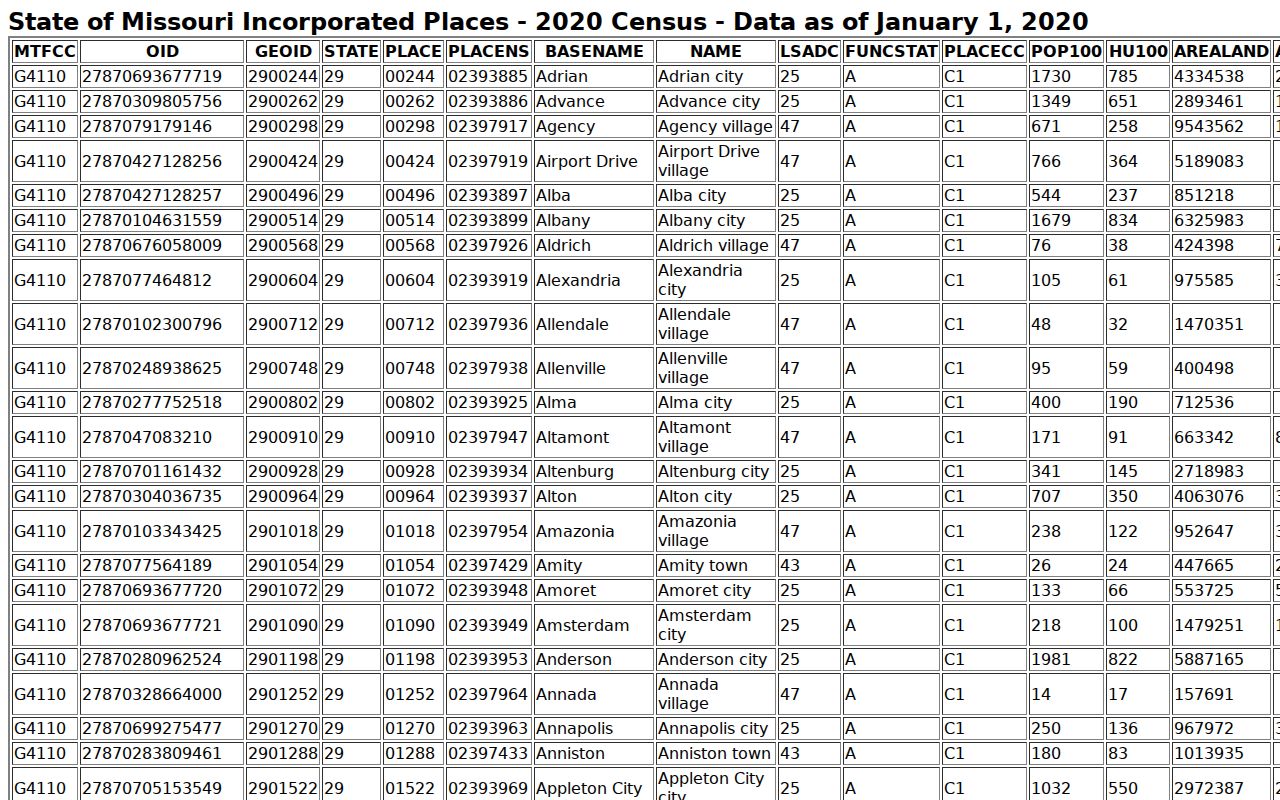
The Census source helps establish the city context, but only an incident location and agency record can identify the criminal-record custodian.
Bunker Arrests and Bookings
Bunker has no verified local holding facility, and Dent County publishes no official jail roster. A custodial Bunker event therefore requires a phone-based chain. Ask the arresting officer or agency for the destination and booking number. If Dent County received the person, call the Dent County Sheriff. If the event was Reynolds-side, confirm that county's custody route. If the person later entered state prison or supervision, use MODOC Offender Search.
A booking record can show the intake date, booking number, arresting agency, initial charge, bond, custody status, and release or transfer. It does not contain the full incident narrative, and it does not establish guilt. The report remains with the arresting agency. The filed count and judgment belong to the court. Keep those Bunker record families separate even when they concern one event.
Bunker Booking Records After Transfer
A person associated with a Bunker arrest may no longer be where the arrest began. County booking can be followed by release, transfer, state sentencing, or outside housing. Dent's older jail was historically described as a 21-bed facility that used outside housing when crowded, but current capacity and housing practices were not verified. Do not use that old figure to predict a present location.
Ask for the exact Bunker release or transfer status. For state custody or supervision, search the MODOC Offender Search by DOC ID or name. The state locator does not cover every county detainee. If a Bunker name disappears from a county inquiry and appears in MODOC, the custody layer changed. The original Bunker agency still holds its incident report.
Municipal Court Records in Bunker
No Bunker-specific municipal portal or verified current court counter was found. Use Missouri Case.net to search by litigant or case number, then use the Missouri court finder to confirm the live municipal clerk and court location. A citation may identify the court directly. State-law filings should identify the county and circuit division.
| Court name | Verify the current Bunker municipal arrangement in the Missouri court finder. |
|---|---|
| Case types | Municipal citations or ordinance matters if a Bunker municipal case exists; state charges belong in the proper county court. |
| Lookup channel | Case.net by litigant, case number, filing route, or scheduled hearing, followed by clerk confirmation. |
| Docket contents | Public case header, parties, charges, events, hearings, disposition, judgment, and financial entries when available. |
| Copies and fees | No Bunker schedule was verified; ask the identified clerk for plain and certified copy prices. |
A public docket may omit sealed material, protected parties, or a remote PDF. A case number is more reliable than a common name and helps the clerk locate the right Bunker-related file.
Bunker Criminal Case Search Routes
Case.net can search litigant names, filing dates, case numbers, scheduled hearings, and the judgment index. For a Bunker record, do not select Dent County until the event is confirmed as Dent-side. An all-courts name search can help locate the court, but the result must still be matched with a case number, filing date, charge, and identity details.
| Known fact | Best search route | Next check |
|---|---|---|
| Exact case number | Case-number search | Confirm court and status |
| Name and likely county | Litigant search with court filter | Compare filing date and charge |
| Upcoming date | Scheduled hearings search | Confirm location with clerk |
| Unknown Bunker-side county | Broader participating-courts search | Identify the circuit before requesting copies |
The Bunker court docket tells what was filed and how the case progressed. The originating agency remains the source for the Bunker police or arrest narrative.
Where Bunker Records Go
The city name does not create one fixed record flow. The actual responding agency writes the report. The receiving jail creates the booking. The prosecutor and court in the proper county create the filed case. Reportable fingerprints, charges, dispositions, and corrections data then move to the Missouri State Highway Patrol CJIS Central Repository.
Record flow: Verified Bunker responding agency › proper county court › Missouri State Highway Patrol CJIS Central Repository
A Bunker municipal citation and a county booking may split into different files. Likewise, a county booking charge can change when a prosecutor files the case. Note the agency name, county, case number, and each record's date. Those four details make it possible to reconcile a report, booking, docket, and MACHS response.
Bunker Crime Records and Small Counts
Bunker's very small population makes single-year crime rates volatile. A handful of events can shift a rate sharply. Agency reporting is another problem. If no active Bunker Police ORI reports for a year, incidents may appear under a county Sheriff or state agency rather than a city row. An absent city row is not evidence that no crime occurred.
The FBI Crime Data Explorer is an official source for checking the agency, year, reporting months, offenses known, arrests, and population denominator.
Before stating a Bunker trend, confirm an active agency row and compare like measures across complete reporting periods.
Small-count caution: Separate Bunker city data from Dent and Reynolds agency totals, and never treat missing reporting as zero incidents.
Bunker Criminal Records in MACHS
The Missouri Automated Criminal History Site provides a statewide layer. A public name check uses personal identifiers and returns Missouri open criminal-history information plus current Missouri registry information. The published base price is $15 plus an online convenience fee, with another $5 for a notarized response. It is broader than a Bunker court search but does not identify which local agency holds every source report.
A no-record name response does not prove no Bunker arrest occurred. An event may be nonreportable, not yet submitted, unmatched, closed, or associated with different identifiers. For one's own identity dispute, the MACHS fingerprint route is stronger because fingerprints separate people who share similar names. Use the local court disposition and certified source records to challenge a missing or mismatched outcome.
Public Access Rules in Bunker
The Missouri Sunshine Law governs requests to the public agency that actually holds a Bunker record. That makes custodian identification the first legal step. A focused request should give contact information, exact record type, date range, location, subject, agency or case number, preferred format, and a cost cap. Ask for the open incident and arrest report under RSMo §610.100 when those are the products sought.
Key Statutes:
RSMo §610.100 defines incident, arrest, and investigative reports and permits limited closure tied to safety or an active investigation.
RSMo §610.024 requires separation of exempt material when the remainder can be released.
RSMo §610.026 governs reasonable search, research, and duplication charges.
Juvenile data, victims, Social Security numbers, medical and classification facts, confidential addresses, investigative material, and security details can be closed or redacted. If a Bunker request is denied, ask for the specific statute and the nonexempt remainder. If the wrong office received it, ask which named agency or court should receive the request.
Document Bunker Record Sources
Keep a short source sheet for every Bunker search. Record the exact location, responding agency, report or citation number, booking destination, county, court, case number, request date, and the name of the office that confirmed each fact. This is especially valuable when a city label hides the county boundary or when custody moved.
Compare Bunker record dates carefully. The incident date, arrest date, booking time, filing date, disposition date, and repository update can all differ. Compare Bunker charges with equal care. The arresting officer's allegation may be amended, declined, dismissed, or replaced by a prosecutor. The final court judgment, not the first booking label, answers whether the case led to a conviction.
Note: For Bunker, the agency and county are essential record identifiers, not mere address details.